
Speaker Details

Muhammad H. Rashid
Professor, IEEE Fellow
Electrical and Computer Engineering
Florida Polytechnic University, USA
Talk Title
Power electronics applications in renewable energy
Power electronics has developed continuously over the years and are finding increasing applications. There are many power converter circuits some of which have become standard topologies and are available as modules from the manufacturers. The demand for the development of environmentally clean, reliable and affordable energy technologies has prompted renewed interest in renewable energy systems worldwide. Many renewable energy technologies today are well developed, reliable, and cost competitive with the conventional fuel generators. The renewable energy sources are generally converted to dc or ac electric voltages or currents. Many renewable energy technologies today are well developed, reliable, and cost competitive with the conventional fuel generators. The power electronics is finding increasing applications in renewable energy technologies to process efficiently and produce a flexible ac or dc output to match a variable or fixed load demand. This presentation reviews the chronological development of power electronic circuit and explains why power electronics is an integral part of energy storage and renewable energy systems for power conversion, transmission and distribution of electric power.
Biography
Muhammad H. Rashid is employed by the Florida Polytechnic Universityas a Professor of Electrical Engineering. Previously he was employed by the University of West Florida, Pensacola, Florida as a professor of electrical and computer engineering. He was also employed by the University of Florida as Professor and Director of UF/UWF Joint Program. Rashid received B.Sc. degree in Electrical Engineering from the Bangladesh University of Engineering and Technology, and M.Sc. and Ph.D. degrees from the University of Birmingham in UK. Previously, he worked as Professor of Electrical Engineeringand the Chair of the Engineering Department at Indiana University- Purdue University at Fort Wayne. Also, he worked as Visiting Assistant Professor of Electrical Engineering at the University of Connecticut, Associate Professor of Electrical Engineering at Concordia University (Montreal, Canada), Professor of Electrical Engineering at Purdue University Calumet, and Visiting Professor of Electrical Engineering at King Fahd university of Petroleum and Minerals (Saudi Arabia), as a design and development engineer with Brush Electrical Machines Ltd. (England, UK), a Research Engineer with Lucas Group Research Centre (England, UK), a Lecturer and Head of Control Engineering Department at the Higher Institute of Electronics (in Libya & Malta).
Rashid is actively involved in teaching, researching, and lecturing in electronics, power electronics, and professional ethics. He has published 22 books listed in the US Library of Congress and more than 160 technical papers. His books are adopted as textbooks all over the world. His book, Power electronics has translations in Spanish, Portuguese, Indonesian, Korean, Italian, Chinese, Persian, and Indian edition. His book, Microelectronics has translations in Spanish in Mexico and in Spain, Italian, and Chinese.
He has received many invitations from foreign governments and agencies to give keynote lectures and consult, by foreign universities to serve as an external examiner for undergraduate, master's and Ph.D. examinations, by funding agencies to review research proposals, and by U.S. and foreign universities to evaluate promotion cases for professorship. Rashid has worked as a regular employee or consultant in Canada, Korea, United Kingdom, Singapore, Malta, Libya, Malaysia, Saudi Arabia, Pakistan, and Bangladesh. Rashid has traveled to almost all States in USA and many countries to lecture and present papers (Japan, China, Hong Kong, Indonesia, Taiwan, Malaysia, Thailand, Singapore, India, Pakistan, Turkey, Saudi Arabia, United Arab Emirates, Qatar, Libya, Jordan, Egypt, Morocco, Malta, Italy, Greece, United Kingdom, Brazil, and Mexico).
He is a Fellow of the Institution of Engineering & Technology (IET, UK) and a Life Fellow of the Institute of Electrical and Electronics Engineers (IEEE, USA). He was elected as an IEEE Fellow with the citation "Leadership in power electronics education and contributions to the analysis and design methodologies of solid-state power converters." Rashid is the recipient of the 1991 Outstanding Engineer Award from The Institute of Electrical and Electronics Engineers (IEEE). He received the 2002 IEEE Educational Activity Award (EAB) Meritorious Achievement Award in Continuing Education with the following citation "for contributions to the design and delivery of continuing education in power electronics and computer-aided-simulation". He is the recipient of the 2008 IEEE Undergraduate Teaching Award with citation: For his distinguished leadership and dedication to quality undergraduate electrical engineering education, motivating students and publication of outstanding textbooks. He is also the recipient of the IEEE 2013 Industry Applications Society Outstanding Achievement Award. Rashid is an ABET program evaluator for electrical and computer engineering (and also from 1995-2000) and was an engineering evaluator for the Southern Association of Colleges and Schools (SACS, USA). He is also an ABET program evaluator for (general) engineering program. He is the Series Editors of Power Electronics and Applications, and Nanotechnology and Applications with the CRC Press. He serves as the Editorial Advisor of Electric Power and Energy with Elsevier Publishing. He lectures and conducts workshops on Outcome-Based Education (OBE) and its implementations including assessments.
Rashid is a Distinguished Lecturer for the IEEE Education Society and a Regional Speaker (previously Distinguished Lecture) for the IEEE Industrial Applications Society. He also authored a book on "The Process of Outcome-Based Education - Implementation, Assessment and Evaluations".2012 UiTM Press, Malaysia

Sajal K. Das
Professor and Daniel St. Clair Endowed Chair
Department of Computer Science
Missouri University of Science and Technology, USA
Talk Title
From Smart Sensing to Smart Living
We live in an era in which our physical and personal environments are becoming increasingly intertwined and smarter due to the advent of pervasive sensing, wireless communications, computing, and actuation technologies. Indeed our daily living in smart cities and connected communities depend on a wide variety of smart service systems and cyber-physical infrastructures, such as smart energy, smart transportation, smart healthcare, etc. Alongside, the availability of low-cost wireless sensors, Internet of Things (IoTs) and rich mobile devices (smartphones) are empowering humans with fine-grained information and opinion collection through crowdsensing about events of interest, resulting in actionable inferences and decisions. This synergy has led to the cyber-physical-social (CPS) convergence with human in the loop that exhibits complex interactions, inter-dependencies and adaptations between engineered or natural systems and human users with a goal to improve the quality of life and experience in what we call smart living. However, the main challenges are posed by the scale, heterogeneity, big data, social dynamics, and resource limitations in context recognition and situation awareness using sensors, IoTs and CPS networks. This talk will highlight unique research challenges from smart sensing to smart living, followed by novel frameworks and models for energy-efficient data gathering, fusion, security and trustworthiness, and trade-off between energy and information quality in multi-modal context recognition. Case studies and experimental results from smart grid and smart healthcare applications will also be presented. The talk will be concluded with directions for future research.
Biography
Dr. Sajal K. Das, whose academic genealogy includes Thomas Alva Edison, is a Professor of Computer Science and the Daniel St. Clair Endowed Chair at the Missouri University of Science and Technology, USA, where he was the Chair of Computer Science Department during 2013-2017. He is also the co-founder of Smart Health Beacons, LLC. Prior to 2013, he was a University Distinguished Scholar Professor of Computer Science and Engineering, and founding director of the Center for Research in Wireless Mobility and Networking (CReWMaN) at the University of Texas at Arlington. During 2008-2011, Dr. Das served the US National Science Foundation (NSF) as a Program Director in the Computer and Network Systems Division. His research interests include wireless sensor networks, mobile and pervasive computing, smart environments, cyber-physical systems, IoTs, crowdsensing, data analytics, cloud computing, cyber security, social and biological networks, and applied graph theory and game theory. He has contributed significantly to these areas and published more than 300 papers in high quality journals, over 400 conference papers, and 53 book chapters. A holder of 5 US patents, Dr. Das has directed numerous funded projects over $16M and coauthored four books – Smart Environments: Technology, Protocols, and Applications (John Wiley, 2005); Handbook on Securing Cyber-Physical Critical Infrastructure: Foundations and Challenges (Morgan Kaufman, 2012); Mobile Agents in Distributed Computing and Networking (Wiley, 2012); and Principles of Cyber-Physical Systems: An Interdisciplinary Approach (Cambridge University Press, 2019). According to DBLP, Dr. Das is one of the most prolific authors in computer science. His h-index is 84 with more than 31,500 citations according to Google Scholar. He is the founding Editor-in-Chief of Elsevier’s Pervasive and Mobile Computing journal, and serves as Associate Editor of several journals including IEEE Transactions on Mobile Computing, IEEE Transactions on Dependable and Secure Computing, and ACM Transactions on Sensor Networks. A founder of IEEE PerCom, WoWMoM, SMARTCOMP and ACM ICDCN conferences, Dr. Das has served as General and Program Chair of numerous conferences. He is a recipient of 10 Best Paper Awards in prestigious conferences like ACM MobiCom and IEEE PerCom, and received numerous awards for teaching, mentoring and research including the IEEE Computer Society’s Technical Achievement Award for pioneering contributions to sensor networks, and University of Missouri System President’s Award for Sustained Career Excellence. He has graduated 42 PhD, 32 MS thesis students, and 9 postdoctoral researchers. Dr. Das is an IEEE Fellow.
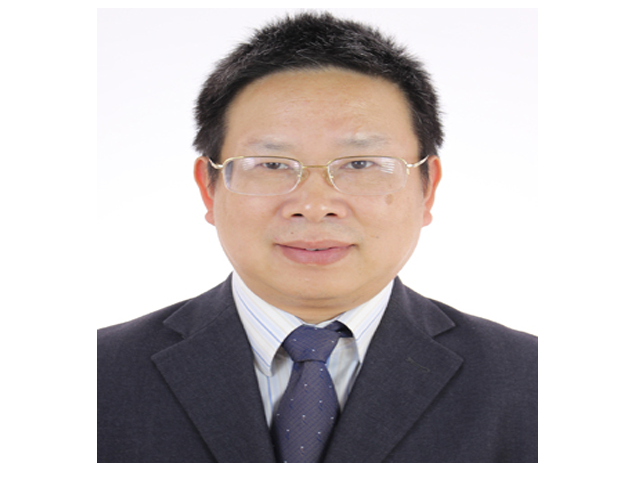
Deng Zhongmin
Vice-director
Hubei Modern Textile Engineering Research Center
Talk Title
The warp knitting technology on the seamless process design method
Warp knitted seamless products because of its shape, light and, beautiful pattern stereo etc excellent characteristic and developing rapidly.This article in the seamless technology molding principle, on the basis of analysis of the realization of the fabric bottomless.And with WUYANG TEXTILE MACHINERY GE2396 seamless knitting machine as an example, the warp knitted seamless molding fabric design and process design to explore, in the technological design process fully consider the models, such as raw material, the organization structure collocation, had been achieved for the product design chain to shape the organization structure, thin fabric, the structure stability.The design method for enterprises to provide technical guidance to production.
Biography
Deng Zhongmin, male, doctor, professor, Academic leader in the field of superior science and characteristics of Hubei Province, senior visiting scholar of Dicken University in Australia, and executive vice-director of Hubei Modern Textile Engineering Research Center. The research areas are textile CAD/CAM information technology and computer application in textile industry. Over the past five years, more than 30 provincial and ministerial projects have been completed, including "Digital Design and Manufacture of Textile Fabrics and Garments Complete Technology Research", "Intelligent Textile Printing System and Equipment", "Jacquard Weaving System Technology and Equipment", and around 28 cooperative projects between enterprises. The project mainly applies computer graphics and image technology and numerical control technology to traditional textile technology, and develops a multi-category intelligent design system for knitted products in textile industry. The results are advanced in the world. It has won many awards for scientific and technological progress in Hubei Province and textile technology of Hong Kong Mulberry Foundation. It has been successfully applied in more than 100 enterprises of domestic and overseas, such as Korea, India, Turkey, Pakistan, Taiwan, Guangdong, Jiangsu, Zhejiang and other regions, which have greatly improved the efficiency of fabric design, achieved excellent social benefits.

Alamgir Hossain
Professor, Artificial Intelligence
Senior Academic, Healthcare Innovation Centre
Senior Academic, SCDT Department of Computer Science & Information Systems
Talk Title
AI, Big Data & Cyber Security to Empower & Enable Industry 4.0
AI (artificial intelligence) is one of the most important technology in the game changing world of every domain to enhance efficiency and productivity with reduced costs. In his talk, Professor Hossain will discuss how to enhance capacity through innovation and skill development to empower and enable industries/business to address the Industry 4.0 challenges. Using practical example of process industry, he will demonstrate the cyber physical systems’ (CPS) challenges that can be addressed using AI (artificial intelligence) enabled process optimisation, machine learning, big data analysis and risk analysis of deployed cyberspace.
Biography
Professor Alamgir Hossain received his PhD from the Department of Automatic Control and Systems Engineering, University of Sheffield. He is currently serving as a Professor of Artificial Intelligence and Head of Digital Research and Innovation (National Horizon Centre) at Teesside University. Prior to this he also served in the Anglia Ruskin University at Cambridge (Director of IT Research Institute), University of Northumbria at Newcastle (Head of Computational Intelligence Group), University of Bradford, University of Sheffield, Sheffield Hallam University and the University of Dhaka (Head of the Department of Computer Science and Engineering). He has extensive research experience in applied AI, decision support system, digital diagnosis, adaptive control and mobile enabled expert system. He has led many large EU & UKRI funded projects as an International Lead Investigator, worth over £16m. He organised conferences, workshops and seminars in over 15 countries. He has published over 300 research articles including 60 research articles as a co-author with the academics of 12 countries.

Fahim Kawsar
Director, Bell Laboratories
Talk Title
Wearables, IoT and You - The Compelling World of Augmented Perception
Wearables and IoT are embracing AI and causing a seismic shift – in that we are observing the emergence of remarkable sensory systems. These transformative sensory systems are capable of understanding us and the world around us, uncovering unprecedented opportunities to help us become a better version of ourselves. In this talk, I will explore the system and algorithmic challenges in modelling and augmenting human behaviour in this new sensory world. I will discuss how mobile, wearable, and IoT devices together with embedded AI can be used as a multi-sensory computational platform to learn, infer, and augment human behaviour and to design ultra-personal computational experience.
Biography
Dr Fahim Kawsar is the Founding Director of Pervasive Systems research at Nokia Bell Labs, Cambridge, UK and holds a Design United Professorship at TU Delft, Netherlands. He spends most of his time at Cambridge building sensory AI systems with novel computational forms to explain human behaviour with other people, places, and things. Fahim is a frequent keynote speaker, (co-)authored 140+ publications, filed 30+ patents, is an AEIC of IEEE Pervasive Computing, sits at the editorial board of ACM IMWUT, serves (or served) as a committee member of leading mobile and ubiquitous computing conferences and had multiple million-scale projects commissioned.

Oksam Chae
Professor, Computer Vision
Talk Title
Image Processing Software Development: Issues, Solutions, Applications
Recent technological advances created a steady influx of image data generation in many areas including biomedical, security, healthcare and automobile industries. The demand of automated quantification and analysis of these large volume and still rapidly growing datasets made the image recognition technology a vital part of these developments and it is expected to play a key role in the upcoming fourth industrial revolution. To deal with the complexity and heterogeneity of image data, until now, most of the image recognition systems were developed for specific problems/applications. Thus, the developed solutions have their own standards and in many cases are not reusable. Recent developments in machine learning and deep learning approaches and popularity of open source development platforms provide some solutions to this problem by allowing novice users to reuse an existing system or to modify and adapt it to solve different problems. To generate intelligent and multi-domain applications systems, a development environment that facilitates users to create, manage and reuse user-defined algorithms efficiently is required. Over the past 30 years my research team made a significant contribution to this development and some of the methods/tools developed in my lab were made publicly available. At the same time we developed numerous new solutions in the area of image enhancement, facial image analysis and medical image processing. In this talk, I will introduce some of these developments to demonstrate how image recognition technology is applied in different fields and at the same time motivate conference attendees to be ready for the fourth industrial revolution. First, I will overview the current trend of feature representation for facial image analysis and discuss the results of our research in facial expression recognition. Second, I will introduce our work in tooth segmentation and dental image analysis. Lastly, I will review our effort to create integrated image processing software development environments and introduce the HelloVision developed by my research group to systematically generate, mange, and reuse image processing software components for both education and research. I will also discuss some research issues in those areas.
Biography
Oksam Chae is a Professor of computer engineering in Kyunghee University, South Korea. He developed the automatic target recognition systems for the Smart Weapons Program funded by DARPA in Texas Instrument Image Processing Lab. His research has focused on the facial analysis, medical image processing, and image processing software development environment. His research group proposed several new edge based local descriptors for facial analysis and moving object detection. He investigated the use of image processing technology for dentistry. He developed the novel way to segment individual teeth from jawbone and the image analysis systems integrated with medical imaging systems for dental hospitals. Professor Chae has been interested in the image processing software development environment for more than 15 years. He tried to development an environment where user can easily create reusable image processing algorithm components, manage them systematically, and produce applications by simply connecting those components. As a result of his long efforts, he introduced the integrated image software development environment, called HelloVision, which was appointed (selected/commercialized?) for Excellent Korean Technology Mark. Based on his research, he founded two successful venture companies and introduced commercial software products based on image processing technology.
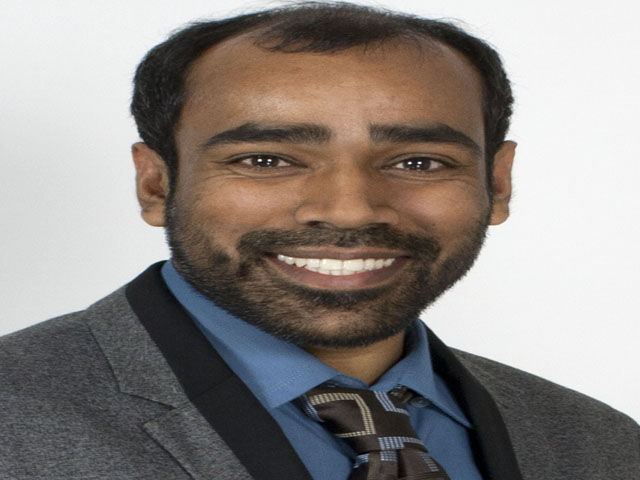
Rahamatullah Khondoker
Professor, Applied Sciences
Talk Title
Who is driving your car?
Autonomous driving function for a vehicle is not a dream anymore as it
has already been demonstrated on the road by several manufacturers in
Asia, Europe, and America. In summary, this type of vehicle is being
controlled by local computers and in some cases, remotely by
humans/computers. If the autonomous driving infrastructure is not
protected properly, hackers may drive the car even though the owner
might think that he has full control over the car. In this talk, I will discuss
how an architecture of an autonomous driving function look like, what are
the threats that exist in such an architecture, and how to tackle them.
Biography
Dr. Rahamatullah Khondoker is currently working as a professor at the department of computer science in Darmstadt University of Applied Sciences, Germany. He is also working as a Team and Project Leader in Security and Privacy Competence Center, Continental, Germany. Before that, he was working as a Researcher in Fraunhofer Institute for Secure Information Technology (Fraunhofer SIT) located in Darmstadt, Germany. At that time,he was also affiliated as a Lecturer at the department of Computer Science in TU Darmstadt, Germany. Prior to that, he worked as a Researcher and Lecturer at the department of Computer Science in TU Kaiserslautern, Germany. From this university, he completed Doctor of Engineering (Dr.-Ing.) in Computer Science with the topic “Future Internet Architectures”. Before that, He completed M.Sc. in Computer Science from University of Bremen, Germany. In 2015, he was nominated as a top 10 researcher by academics.de Germany. He was awarded from Ericsson, Germany in the year 2008 and from the European Future Internet Architecture (FIA) Research Roadmap Group in October 2011. He worked with the DFG project (PoSSuM), BMBF projects (G-Lab, G-Lab DEEP, FutureIN), EU projects (PROMISE, EuroNF, PRUNO), and several industry projects. Currently, he is focusing on the security and privacy of new vehicle architectures, concentrating specially on High Performance Computing Platform (HPC) located in vehicles which will be coming in the market from 2021. Previously, he worked on topics such as Future Internet Architectures, 5G, Industry 4,0, Software-Defined Networking (SDN), and Network Function Virtualization (NFV).

Md Atiqur Rahman Ahad
Senior Member, IEEE
Talk Title
Vision- and Sensor-based Activity & Gait Analysis
Globally, research activities on healthcare, elderly support, smart homes, activity of daily living (ADL) are progressing rapidly due to the advent of IoT sensor-based systems and devices. There is a huge progress recently on vision-based activity and gait analysis – because of the availability of GPUs and the intense involvement of deep learning-based methodologies. However, the challenges are complex and diversified, and hence, the progress in these domains are still constrained by a number of genuine challenges. In this keynote speech, these scopes and challenges will be summarized and some way outs will be outlined. The talk will be based on the following works.
Reference:
• MAR Ahad, “Computer Vision and Action Recognition: A Guide for Image Processing and Computer Vision Community for Action Understanding,” Springer, 2011.
• MAR Ahad, “Motion History Images for Action Recognition and Understanding,” Springer, 2013.
• TT Ngo, MAR Ahad, AD Antar, M Ahmed, D Muramatsu, Y Makihara, Y Yagi, S Inoue, T Hossain, and Y Hattori, “OU-ISIR Wearable Sensor-based Gait Challenge: Age and Gender”, 12th IAPR Intl. Conf. on Biometrics (ICB), IEEE, 2019.
• MZ Uddin, D Muramatsu, N Takemura, MAR Ahad, Y Yagi, “Spatio-temporal silhouette sequence reconstruction for gait recognition against occlusion,” IPSJ Transactions on Computer Vision and Applications, Springer, 11(1), 2019.
• MAR Ahad, AD Antar, and M Ahmed, “IoT Sensor-Based Activity Recognition - Human Activity Recognition,” to appear in Springer Nature Switzerland AG, 2020.
• MAR Ahad, U Mahbub, and T Rahman, “Contactless Human Activity Analysis,” Edited, to appear in Springer Nature Switzerland AG, 2020.
Biography
Md Atiqur Rahman Ahad, SMIEEE; Professor, University of Dhaka (DU); Specially Appointed Associate Professor, Osaka University. He did B.Sc.(Honors) & Masters (DU), Masters (University of New South Wales), PhD (Kyushu Institute of Technology), JSPS Postdoctoral Fellow and Visiting Researcher. His authored books are: “Motion History Images for Action Recognition and Understanding”, in Springer; “Computer Vision and Action Recognition”, in Springer; “IoT-sensor based Activity Recognition”, in Springer (in press). He has been authoring/editing a few more books. He published 130+ peer-reviewed papers, 60+ keynote/invited talks, 25+ Awards/Recognitions. He is Editorial Board Member of Scientific Reports, Nature; Assoc. Editor of Frontiers in Computer Science; Editor of Int. Journal of Affective Engineering; Encyclopedia of Computer Graphics and Games, Springer; Editor-in-Chief: Int. Journal of Computer Vision & Signal Processing http://cennser.org/IJCVSP; General Chair: 9th ICIEV http://cennser.org/ICIEV; 4th IVPR http://cennser.org/IVPR; 2nd ABC https://abc-research.github.io, Guest-Editor: Pattern Recognition Letters, Elsevier; JMUI, Springer; JHE, Hindawi; IJICIC; Member: OSA, ACM, IAPR. More: http://AhadVisionLab.com

Celia Shahnaz
Chair, IEEE BDS
Talk Title
Fusion of Hand-Engineered and Deep Learning Features for Tuberculosis Detection from Chest X-Ray Images
Tuberculosis detection from chest X-Ray images is an important and yet very dreary task to be done manually for physicians as the number of patients is increasing day by day. In this regard, a computer-aided diagnosis system can facilitate the process to diagnose this increasing number of patients in a shorter time. For reliable detection of abnormality in chest XRay, different handcrafted features are used previously because of their low complexity in the extraction procedure and higher accuracy even in a small dataset. On the other hand, deep learning (DL) features gain popularity in many computer vision tasks because of their inhuman performance in comparison to the hand-engineered features. However, the extraction of high level DL features totally depends on the availability of a larger training set. Considering all these facts, we proposed a method that utilizes both the hand-engineered and deep learning-based features together for the tuberculosis detection task. The major finding of this work is that a combination of these two types of features having different error profile can provide better accuracy than their performance individually. The features from both processing arms are selected based on their quality in term of standard performance measure criteria and then ensembled utilizing Random Forest classifier to classify the x-ray images. The performance of this proposed method is evaluated on the set of chest x-ray images collected by Shenzhen hospital, China. The final accuracy and area under the ROC curve (AUC) indicates that it outperforms most of the state of the art methods.
Biography
Celia Shahnaz received Ph.D. degree in electrical and computer engineering from Concordia University, Montreal, QC, Canada, in 2009. Currently she is serving as a Professor in the Department of Electrical and Electronic Engineering, BUET, from where she received her B.Sc. and M.Sc. degrees in 2000 and 2002, respectively. Dr. Celia is a senior member of IEEE, a fellow of IEB and has published more than 120 international journal and conference papers. Dr. Shahnaz was a recipient of the Canadian Commonwealth Scholarship and Fellowship for pursuing Ph.D. study in Canada in 2004. She is the recipient of Bangladesh-Academy of Science gold model for her contribution in science and Engineering in Bangladesh. She is the mentor of Ist prize winning project in the IEEE Industrial Application Society (IAS) CMD Robotics Contest 2019, USA, that of 2nd prize winning project in the IEEE Industrial Application Society (IAS) CMD Robotics Contest 2018, USA and that of Ist prize winning project in the Category HEALTH FACILITY in IEEE IAS CMD Humanitarian Project Contest 2017, USA. She is the supervisor of 5th rank winning team in Signal processing cup (SPCUP) competition in ICASSP 2015, Australia. Recently, her papers have received best paper award of biomedical Engineering track at TENCON 2017, that of Humanitarian Challenge track at R10 HTC 2017, that of Biomedical Engineering track at IEEE WIECON-ECE 2016, and the best interactive poster award at icIVPR 2017.
Recently, she has been selected as the 2019 IEEE Region 10 Humanitarian Technology Activites Outstanding Volunteer Award, recipient of 2016 IEEE Member and Geographic Activities (MGA) Leadership award with citation “ For leadership in engineering and technology driven innovative IEEE Women in Engineering activities for enhanced membership development and engagement in Region 10 and across the globe”. She is also the recipient of 2015 WIE Inspiring Member Award from IEEE global Women in Engineering (WIE). Under her leadership, WIE Bangladesh Section (BD) has received 2015 WIE Affinity group (AG) of the year award-honorable mention from IEEE global WIE. She is the winner of 2013 IEEE Region 10 WIE Professional Volunteer award. She is serving as an advisor of the WIE BD AG and BUET WIE Student branch AG. Under her advisory role, WIE BD AG also has won 2016 R10 section WIE AG of the year award and 2017 WIE AG of the year award from IEEE WIE. BUET WIE SB has won 2018 WIE SB AG of the year award-honorable mention , 2019 WIE SB AG of the year award from global IEEE WIE and 2018 R10 WIE SB AG of the year award.
She has been appointed as 2017-19 IEEE PES Women in Power (WiP) Region 10 Regional Representative, 2017 and 2019 Communications Chair, IEEE SIGHT steering committee, 2017-18 Chair, IEEE Women in Engineering (WIE) Workshops Subcommittee and, and 2017 member, IEEE SSIT WIE and SIT subcommittees. In 2016, she has served as committee member of Special event subcommittee and that of Women in Leadership Collabratec Community of IEEE global /MGA WIE. She served as the IEEE Region 10 (Asia-Pacific) WIE Coordinator 2016, the first Bangladeshi to occupy such a coordinator position in R10. In 2017-18, she has served as IEEE R10 Subcommittees (WIE, and Education). She started contributing to IEEE Region 10 as Region 10 WIE webmaster in 2014. She has served as a member of IEEE Region 10 WIE subcommittee and also as a representative of IEEE Region 10 WIE volunteer committee in 2015. She has also served as R10 Humanitarian Technology Activity (HTA) subcommittee in 2017. She was a Jury member of IEEE Young Engineers Humanitarian (AIYEHUM) Challenge 2017 and a member of the jury coordination team in All IEEE Young Engineers Humanitarian (AIYEHUM) Challenge 2015 organized by the IEEE Region 10. She is also the founder and coordinator of FLASH, a special interest group on Humanitarian Technology (SIGHT) in IEEE Bangladesh Section. In 2018, in order to ensure clean water for Rohingya refugee in Bangladesh, she has conceptualized the project “Bringing Life Back to Rohingya” as a primary applicant and received acceptance of fund from IEEE Humanitarian activity Committee (HAC) in a phased approach. She was the General Chair, IEEE WIE International leadership Summit Dhaka 2018 and General Chair of Humanitarian Project Competition -2018 that won IEEE HAC event funds. She was the General Co-Chair, IEEE R10 Humanitarian technology conference (HTC) 2017. She has served as a mentor and program Chair of International Humanitarian Technology Project Competition (IHTPC) and eleven Parallel tracks to inspire humanitarian technologies for students, WIE, YP, entrepreneurs, Industry people etc during R10 HTC 2017. She has served as lead/co-lead of several humanitarian technology based projects for deaf, dumb, blind people and autistic children. She is the founder/organizer of IEEE Signal Processing (SPS) and IEEE Industrial Applications (IAS) societies of Bangladesh Chapters. She has also co-founded/co-coorganized IEEE Robotics and Automation society (RAS) and IEEE society on social implications on technology (SSIT) Bangladesh chapters. She is the founder and General Chair/technical Program Chair of five collocated IEEE Technical society/area specific conferences in 2019, Such as SPS, Engineering Medicine and biology (EMBS), RAS, IAS and SSIT, an initiative for the first time in IEEE Bangladesh Section.
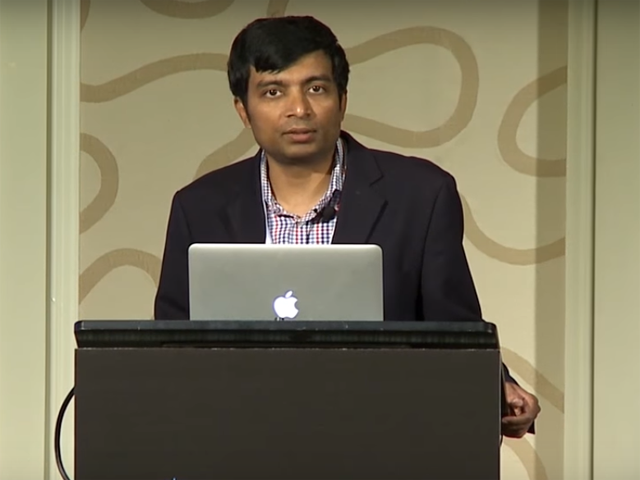
Latifur Khan
Professor, Computer Science
Talk Title
Big Data Stream Analytics and Its Applications
Data streams are continuous flows of data. Examples of data streams include network traffic, sensor data, call center records and so on. Data streams demonstrate several unique properties that together conform to the characteristics of big data (i.e., volume, velocity, variety and veracity) and add challenges to data stream mining. In this talk we will present an organized picture on how to handle various data mining/machine learning techniques in data streams. In addition, we will present a number of stream classification applications such as adaptive website fingerprinting, textual stream analytics (political actor identification over textual stream), attack trace classification using good quality similarity metrics (metric learning) and domain adaptation.
This research was funded in part by NSF, NASA, Air Force Office of Scientific Research (AFOSR), NSA, IBM Research, HPE and Raytheon.
Biography
Dr. Latifur Khan is currently a full Professor (tenured) in the Computer Science department at the University of Texas at Dallas, USA where he has been teaching and conducting research since September 2000. He received his Ph.D. degree in Computer Science from the University of Southern California (USC) in August of 2000. Dr. Khan obtained his B.Sc. degree in Computer Science and Engineering from Bangladesh University of Engineering and Technology (BUET), Dhaka, Bangladesh in November of 1993 with First class Honors (2nd position). He was a recipient of Chancellor Awards from the President of Bangladesh.
Dr. Khan is an ACM Distinguished Scientist and received IEEE Big Data Security Senior Research Award, in May 2019, and Fellow of SIRI (Society of Information Reuse and Integration) award in Aug, 2018. He has received prestigious awards including the IEEE Technical Achievement Award for Intelligence and Security Informatics and IBM Faculty Award (research) 2016.
Dr. Latifur Khan has published over 300 papers in premier journals such as VLDB, Journal of Web Semantics, IEEE TDKE, IEEE TDSC, IEEE TSMC, and AI Research and in prestigious conferences such as AAAI, IJCAI, CIKM, ICDE, ACM GIS, IEEE ICDM, IEEE BigData, ECML/PKDD, PAKDD, ACM Multimedia, ACM WWW, ICWC, ACM SACMAT, IEEE ICSC, IEEE Cloud and INFOCOM. He has been invited to give keynotes and invited talks at a number of conferences hosted by IEEE and ACM. In addition, he has conducted tutorial sessions in prominent conferences such as SIGKDD 2017, 2016, IJCAI 2017, AAAI 2017, SDM 2017, PAKDD 2011 & 2012, DASFAA 2012, ACM WWW 2005, MIS2005, and DASFAA 2007.,
Currently, Dr. Khan’s research area focuses on big data management and analytics, data mining and its application over cyber security, complex data management including geo-spatial data and multimedia data. His research has been supported by grants from NSF, the Air Force Office of Scientific Research (AFOSR), DOE, NSA, IBM and HPE. More details can be found at: www.utdallas.edu/~lkhan/
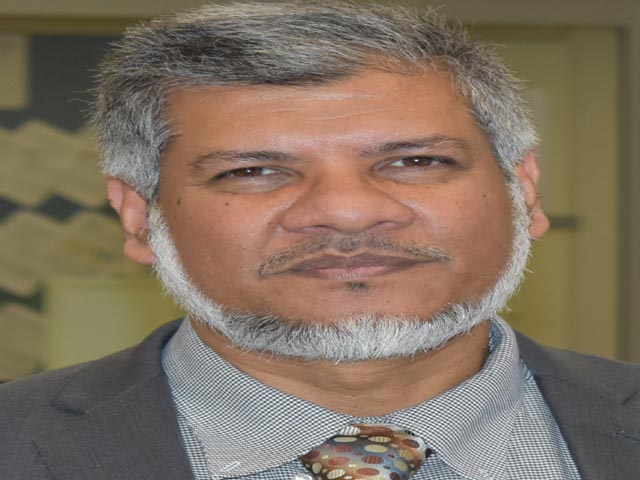
Kashem Muttaqi
Professor
Talk Title
Energy Technologies for Future Power Grids
The talk is about future power grids where new and modern technologies will be the key players for electricity generation, transmission and distribution. The current power grids are undergoing an unprecedented transformation, changing the way we have been producing, delivering, and consuming energy over the past century. This new energy era includes renewable sources such as solar and wind, supported by distributed or community energy storage, integrated to power grids. Energy supply is delivered through systems that occur at a variety of scales—from individual households and businesses to energy systems that stretch across the continent. The systems are evolving to provide clean energy to consumers to meet new variable demands from smart appliances to electric and alternative fuel vehicles entering into the market. Connections are also developing among the power infrastructure and non-power infrastructures such as transportation, communication, etc. As we see these connections evolve, it is causing us to rethink the current paradigms of system analysis and planning with a focus on how we achieve the most flexible, efficient, and reliable power grid for the future—one that enables operation in a domain which is very different than the one that we have to deliver the services to consumers at an affordable cost.
Biography
Prof. Kashem Muttaqi received the B.Sc. degree in electrical and electronic engineering from Bangladesh University of Engineering and Technology (BUET), Dhaka, Bangladesh in 1993, the M.Eng.Sc. degree in electrical engineering from University of Malaya, Kuala Lumpur, Malaysia in 1996 and the Ph.D. degree in Electrical Engineering from Multimedia University, Selangor, Malaysia in 2001. Currently, he is a Professor at the School of Electrical, Computer, and Telecommunications Engineering, and member of Australian Power Quality and Reliability (APQRC) at the University of Wollongong, Wollongong, Australia. He was associated with the University of Tasmania, Hobart, Australia as a Research Fellow/Lecturer/Senior Lecturer from 2002 to 2007, and with the Queensland University of Technology, Brisbane, Australia as a Research Fellow from 2000 to 2002. Previously, he also worked for Multimedia University as a Lecturer for three years. He has more than 21 years of academic experience and authored or coauthored 315 papers in international journals and conference proceedings. His research interests include distributed generation, renewable energy, electrical vehicles, micro-grids, smart-grid, power system planning and emergency control. He is a Senior Member of IEEE, Technical Committee Paper Review Chair for Industry Automation and Control Committee (IACC) associated with the IEEE Industry Application Society (IAS), and Associate Editor for IEEE Transactions on Sustainable Energy, one of the premier journals of IEEE Power and Energy Society (PES).
Prof. Kashem Muttaqi is the Electrical Discipline Leader at the School of Electrical, Computer, and Telecommunications Engineering (ECTE), and 09 Engineering Cluster Head at the University of Wollongong. He has led collaborative research with several Australian power companies (including Hydro Tasmania, Transend Networks, Aurora Energy, Endeavour Energy, Transgrid and Essential Energy), and various Australian and overseas universities. He has been chief investigator on five Australian Research Council (ARC) Linkage Projects, three ARC Discovery Projects and one ARC Linkage Infrastructure, Equipment and Facilities (LIEF) Project in the field of electrical power engineering, and majority of them were led by him. He has secured around A$9.5M in research income from various sources. Further information about Prof. Muttaqi can be seen at the following link: https://scholars.uow.edu.au/display/kashem_muttaqi